Why Do Dentists Use a 3D CBCT Scan Before Dental Implants?

Choosing dental implants is a big step. It is not just about replacing a missing tooth. It is about planning a safe, stable, and natural-looking result that can last for many years. That is why modern implant treatment often starts with detailed imaging. A normal dental X-ray can show useful information, but it does not always show the full picture.
A CBCT Scan for Dental Implants in Penge helps dentists see the jawbone, nerves, sinus areas, and implant site in 3D before treatment starts. This makes implant planning safer, more accurate, and more tailored to each patient.
At Green Lane Dental Centre, implant planning focuses on precision. Every patient has different bone levels, tooth positions, bite patterns, and medical needs. A CBCT scan helps the dentist understand these details before placing an implant.
What Is a CBCT Scan?
CBCT stands for cone beam computed tomography. It is a type of 3D dental scan. Unlike a normal 2D X-ray, it creates a three-dimensional view of your teeth, jawbone, roots, nerves, and surrounding structures.
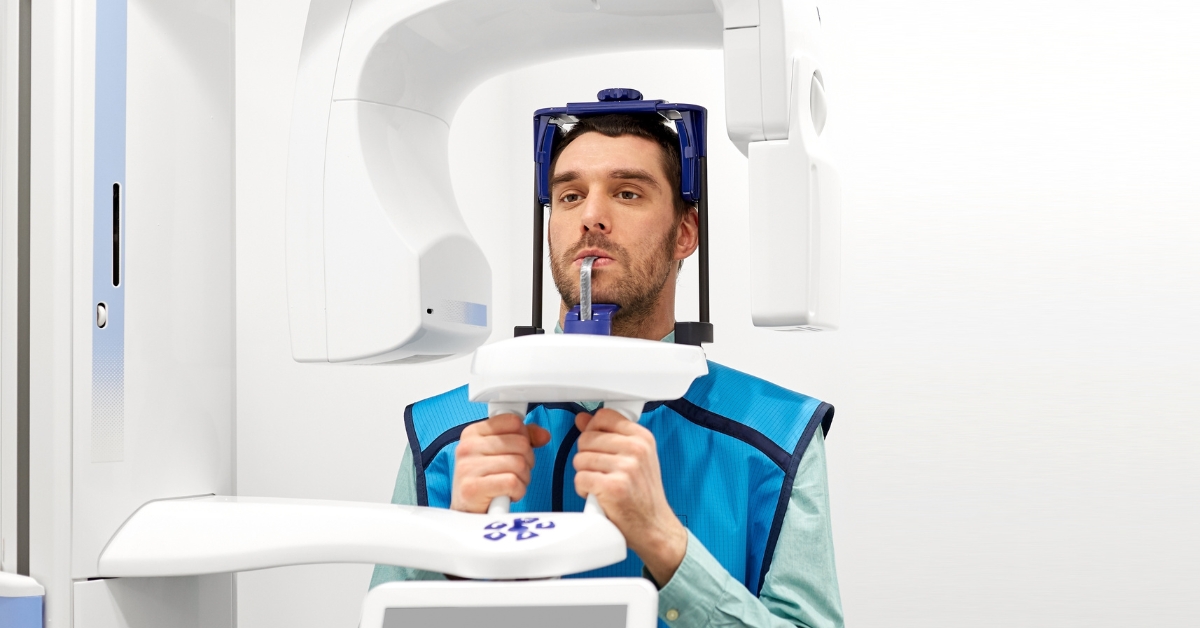
The scan is quick. You usually stand or sit still while the machine moves around your head. It captures a series of images, which the software turns into a 3D model.
This model helps your dentist assess:
- Bone height
- Bone width
- Bone density
- Nerve position
- Sinus position
- Tooth root shape
- Infection or hidden pathology
- The safest implant angle
For dental implants, this level of detail can make a major difference.
Why Normal X-Rays Are Not Always Enough
Traditional dental X-rays are useful. They show teeth, roots, and bone in two dimensions. However, they flatten a 3D structure into a 2D image.
That means some details may be harder to assess. For example, a standard X-ray may not show the exact width of the jawbone. It may also make it harder to judge how close an implant site is to a nerve or sinus.
Dental implants need careful placement. The implant must sit in the right position, at the right angle, and with enough bone around it.
A 3D dental scan Penge assessment helps reduce guesswork. It gives the dentist a clearer view before surgery.
How a CBCT Scan Improves Implant Safety
Safety is one of the main reasons dentists use CBCT scans before implants.
Important structures sit close to implant sites. In the lower jaw, a major nerve runs through the bone. In the upper jaw, the sinus can sit close to the back teeth. Placing an implant without knowing the exact position of these structures can increase risk.
A CBCT scan helps your dentist:
- Identify nerve pathways
- Check sinus position
- Avoid weak bone areas
- Plan the safest implant length
- Choose the safest implant width
- Reduce surgical complications
This does not mean every implant case is risky. It means accurate planning helps protect the patient.
Research and dental guidance support CBCT use in implant planning when 3D information is needed. Studies note that CBCT can help measure bone and assess important structures such as the mandibular canal and maxillary sinus during implant planning.
CBCT Scan for Dental Implants in Penge: Why Bone Quality Matters
A CBCT Scan for Dental Implants in Penge is especially useful because implants need enough bone to hold them firmly. If the bone is too thin or too shallow, the implant may not be stable.
Bone can shrink after tooth loss. This happens because the jawbone no longer receives stimulation from the missing tooth root. Over time, the ridge may become narrower or lower.
A CBCT scan helps assess whether:
- There is enough bone for an implant
- Bone grafting may be needed
- A sinus lift may be needed
- A shorter or narrower implant may work
- A surgical guide may improve accuracy
Without this information, treatment planning may be less predictable.
Planning the Exact Implant Position
Dental implants must do more than fit into the bone. They must also support the final crown, bridge, or denture in the right position.
Poor implant positioning can affect:
- Bite comfort
- Gum appearance
- Crown shape
- Cleaning access
- Long-term stability
A CBCT scan helps the dentist plan from both a surgical and cosmetic point of view. This is important because an implant placed in the wrong position may be harder to restore naturally.
Good implant planning Penge care looks at the final smile before surgery begins. The implant is planned to support the final tooth, not just to fill a gap in the bone.
How CBCT Scans Help With Surgical Guides
Some implant cases use a surgical guide. This is a custom-made guide that helps direct the implant into the planned position.
A CBCT scan can be combined with digital scans of the teeth to design this guide. The guide sits in the mouth during treatment and helps control the angle and depth of placement.
This can be useful for:
- Multiple implants
- Full arch treatment
- Complex anatomy
- Limited bone
- Smile-zone implants
- Patients who want highly planned treatment
A surgical guide does not replace clinical skill. It supports accuracy and helps the dentist follow the digital plan.
When Is a CBCT Scan Most Important?
Not every dental treatment needs a CBCT scan. Dentists should only use imaging when it is justified. However, CBCT scans are often important before implant treatment because implants involve the jawbone and nearby anatomy.
A scan may be especially helpful if:
- You have been missing a tooth for a long time
- You need a back tooth implant
- You have bone loss
- You may need a sinus lift
- You need several implants
- You have had previous failed implants
- You need implant-supported dentures
- Your dentist needs to check nerve position
At Green Lane Dental Centre, your dentist will explain why a scan is recommended and how it supports your treatment plan.
Does a CBCT Scan Hurt?
No. A CBCT scan does not hurt. There are no needles and no physical discomfort. You only need to stay still for a short time while the scanner captures the images.
The process is usually quick and simple. Most patients find it easier than expected.
If you feel nervous, tell the team before the appointment. They can talk you through each step.
What About Radiation?
CBCT scans use X-rays, so they do involve radiation. However, dental teams follow strict safety principles. The scan should only be taken when the benefit outweighs the risk.
The dentist will choose the appropriate scan area and settings for your case. This helps keep exposure as low as reasonably possible.
CBCT scans are not used casually. They are used when 3D detail is needed to support diagnosis or treatment planning.
What Happens After the Scan?
After your scan, the dentist reviews the 3D images. They look at your jawbone, gum support, nearby structures, and implant site.
They may then explain:
- Whether implants are suitable
- How many implants you may need
- Whether bone grafting is needed
- Whether a sinus lift is needed
- What type of restoration may suit you
- The expected treatment stages
- The estimated cost and timeline
This makes your consultation clearer. Instead of guessing, your dentist can show you what is possible and why.
CBCT Scan for Dental Implants in Penge and Long-Term Success
A CBCT Scan for Dental Implants in Penge supports long-term success by improving diagnosis and planning. Implant treatment is not just a one-day procedure. It is a full treatment journey.
Good planning helps avoid problems such as:
- Poor implant angle
- Lack of bone support
- Nerve irritation
- Sinus complications
- Difficult cleaning access
- Crown shape problems
The scan gives your dentist better information before treatment begins. Better information leads to better decisions.
Why Patients Value 3D Planning
Patients often feel more confident when they understand their treatment. A 3D scan can help explain the process visually.
You may be able to see:
- Where the missing tooth sits
- How much bone is available
- Why an implant is possible
- Why extra treatment may be needed
- Where the implant may be placed
This makes the process easier to understand. It also helps patients feel more involved in decisions.
A 3D dental scan Penge appointment can turn a complex treatment plan into something much clearer.
Is a CBCT Scan Needed for Every Implant?
Not always. Some simple cases may be assessed with other imaging first. However, many implant cases benefit from 3D planning.
Your dentist will decide based on your clinical needs. The scan should have a clear purpose. It should help answer a question that cannot be fully answered with a standard X-ray alone.
For example, a CBCT scan may be needed to check bone width, locate a nerve, or plan a surgical guide.
How Green Lane Dental Centre Uses CBCT Planning
Green Lane Dental Centre provides implant treatment with a focus on careful planning and patient comfort. The team can assess missing teeth, gum health, bone support, and long-term options.
For patients considering implants, CBCT scanning can help create a personalised plan. This may include a single implant, multiple implants, full arch treatment, or implant-supported dentures.
Strong implant planning Penge care means looking beyond the gap. It means planning the foundation, the bite, the gum line, and the final result.
Final Thoughts
Dentists use CBCT scans before dental implants because they provide vital 3D information. This helps assess bone, avoid important structures, and plan the implant position more accurately.
A CBCT Scan for Dental Implants in Penge can make implant treatment safer, clearer, and more predictable. It helps the dentist plan with precision and helps the patient understand the journey.
If you are thinking about dental implants, a consultation at Green Lane Dental Centre can help you find out whether a CBCT scan is needed for your case.
FAQ
What is a CBCT scan for dental implants?
A CBCT scan is a 3D dental scan used to assess the jawbone, nerves, sinuses, and implant site. It helps dentists plan implant treatment more accurately than a standard 2D X-ray.
Why do dentists use a CBCT scan before implants?
Dentists use CBCT scans to check bone levels, locate nerves, assess the sinus area, and choose the safest implant position. This improves planning and reduces the risk of complications.
Is a CBCT scan painful?
No. A CBCT scan is painless. You stand or sit still while the machine moves around your head. The scan usually takes only a short time.
Does every implant patient need a CBCT scan?
Not every patient needs one. Your dentist will recommend it if 3D information is needed to plan safe implant placement. It is often used for complex cases or where bone levels need careful assessment.
Is a CBCT scan safe?
CBCT scans use X-rays, so they involve radiation. However, dentists only recommend them when clinically justified. The scan area and settings are chosen to keep exposure as low as possible.
Can a CBCT scan show if I need bone grafting?
Yes. A CBCT scan can show bone height, width, and shape. This helps your dentist decide whether bone grafting or a sinus lift may be needed before implant placement.
How long does a CBCT scan take?
The scan itself is usually quick. The appointment may take longer because the team needs to position you correctly and explain the process.
Can CBCT scans help with surgical guides?
Yes. CBCT scans can be used with digital impressions to design surgical guides. These guides help place implants in the planned position with greater accuracy.
What happens after the CBCT scan?
Your dentist reviews the images and explains your implant options. They may discuss implant position, bone quality, treatment stages, costs, and whether any extra procedures are needed.
Where can I get a CBCT scan for implants in Penge?
Green Lane Dental Centre can assess your implant needs and explain whether a CBCT scan is recommended as part of your treatment planning.